

Big, Bold and Unashamedly Rutherglen: The Story of Durif
When most people think about Rutherglen, they think Muscat. But there's another star gracing almost every vineyard in the region: Durif. Big, bold, with robust tannins and intense flavours, Durif (also known as Petite Sirah) is a rich, full-bodied red wine celebrated for its deep colour and powerful character, and it pairs perfectly with a cosy winter meal.
Here at Stanton & Killeen, we cultivate 3.81 hectares of Durif, making it our third most planted variety after Muscat and Shiraz. Our oldest vines, planted in 1976, continue to thrive, contributing to both our fortified and table wines.
Durif holds a special place in our hearts and our history. If you've stopped by the cellar door, you've likely indulged in a glass or two. But how much do you really know about this variety?
As we gear up for The Dark Side of Wine, Rutherglen's exciting new event showcasing Durif and Muscat, we invite you to dive into the rich history and unique charm of one of the region's most beloved wines.
Origins and History
Durif's story begins in France in the late 19th century, named after its creator, Dr. François Durif. This botanist developed the variety by crossbreeding Peloursin and Syrah, with the goal of creating a grape resistant to downy mildew, a prevalent problem in European vineyards at the time. Little did he know, he was creating a variety that would find its true home in the sun-soaked vineyards of Rutherglen.
Syrah, known as Shiraz here in Australia, is the lead grape in France's Northern Rhône Valley, forming the backbone of revered wines from Côte-Rôtie and Hermitage. Despite its French origins, Durif never took off in France, but it won the hearts of many in California and Rutherglen, where it flourishes in hotter, drier climates. It was pioneering Victorian viticulturalist François de Castella who first brought Durif to Australia, planting it in Rutherglen in 1908.
While most of the world knows this variety as Durif, the United States uses the name Petite Sirah. But if you've had the pleasure of trying it, you'd know there is nothing petite about it. Much like its parent Syrah, wines made from Petite Sirah are big and structured, with rich flavours and powerful tannins. In fact, Durif is typically even more tannic than Syrah. The name refers to the small berry size, certainly not the flavour or the weight in the glass.
Durif in Rutherglen
Rutherglen has become synonymous with Durif. The variety has made its home here for over a century, thriving in the region's warm climate, rich alluvial soils and long ripening season. Durif is known for its ability to express terroir more than most. While it can be a challenging vine to grow and wine to make, when handled with care it produces richly flavoured, vibrant, age-worthy reds that are among the standout expressions of the region.
With tight clusters of small grapes, Durif is highly susceptible to bunch rot, which is why Rutherglen's dry vintage conditions are so favourable. The variety benefits from extended hangtime to develop its full extent of tannins and phenolics, but picking time is critical. The window is small: too soon and the phenolics are underripe; too late and you risk bunch rot and an overly tannic wine.
Rutherglen's winemakers produce a range of styles using various techniques, including cool fermentation to preserve fruit character, extended skin contact for smoother texture and more savoury complexity, and maturation in French or American oak for up to 18 months to add toasty depth.
What Does Durif Taste Like?
At its core, Durif is a wine of depth and intensity. Expect concentrated dark fruits: blackberry, plum and dark cherry, underscored by black pepper, dark chocolate and a hint of coffee. With oak maturation, you'll often find cedar and vanilla adding complexity to the finish. Wines from Rutherglen tend to carry a distinctly earthy, savoury character alongside the fruit, a reflection of the region's rich alluvial soils and long, warm growing season.
Durif vs Shiraz: What's the Difference?
Given that Durif is a direct descendant of Shiraz, the two share obvious common ground: dark fruit, spice, full body. But there are clear points of difference. Durif typically carries more tannin and deeper colour than Shiraz, and its flavour profile tends toward the earthier, more savoury end of the spectrum. Where Shiraz can be generous and fruit-forward from a young age, Durif has more structural grip and benefits from time in the glass or in the cellar. If Shiraz is the crowd-pleaser, Durif is the one you have the long conversation with.
Evolution of Durif Style in Rutherglen
Historically, Rutherglen Durif was known for its big, heavy style, high tannins and elevated alcohol, wines that required decades of aging before they showed their best. That approach has evolved significantly in recent years. Modern Rutherglen Durif focuses on balance and elegance. Winemakers have refined their techniques to create wines that still showcase the intensity and depth of the variety but are far more approachable in their youth, while still possessing genuine aging potential.
Stanton & Killeen Reserve "Fortitude" Durif
Our approach to Durif is rooted in both tradition and innovation. We honour the legacy of our old vines while embracing modern winemaking to produce wines of exceptional quality. The Reserve "Fortitude" Durif is dedicated to the late Norman Killeen, who guided the company through many decades of change.
Our house style for Durif is balanced, defined and elegant, with softer tannins and fresh fruit flavours. This modern take on the variety makes it approachable young while showcasing the best of what Rutherglen has to offer.
Jeni Port wrote of the wine: "Yes, it's a Rutherglen Durif. No, it's not turned up to 11. In fact, it's an excellent study in how to contain the grape's inherent power while also bringing to light its more aromatic, spice-laden, berry-chocolate and rosemary and pepper side."
Interesting Facts About Durif
Double Identity. Durif is also known as Petite Sirah, especially in the United States. The name refers to the berry size, not the wine's stature. Think of it as calling a Great Dane "Tiny."
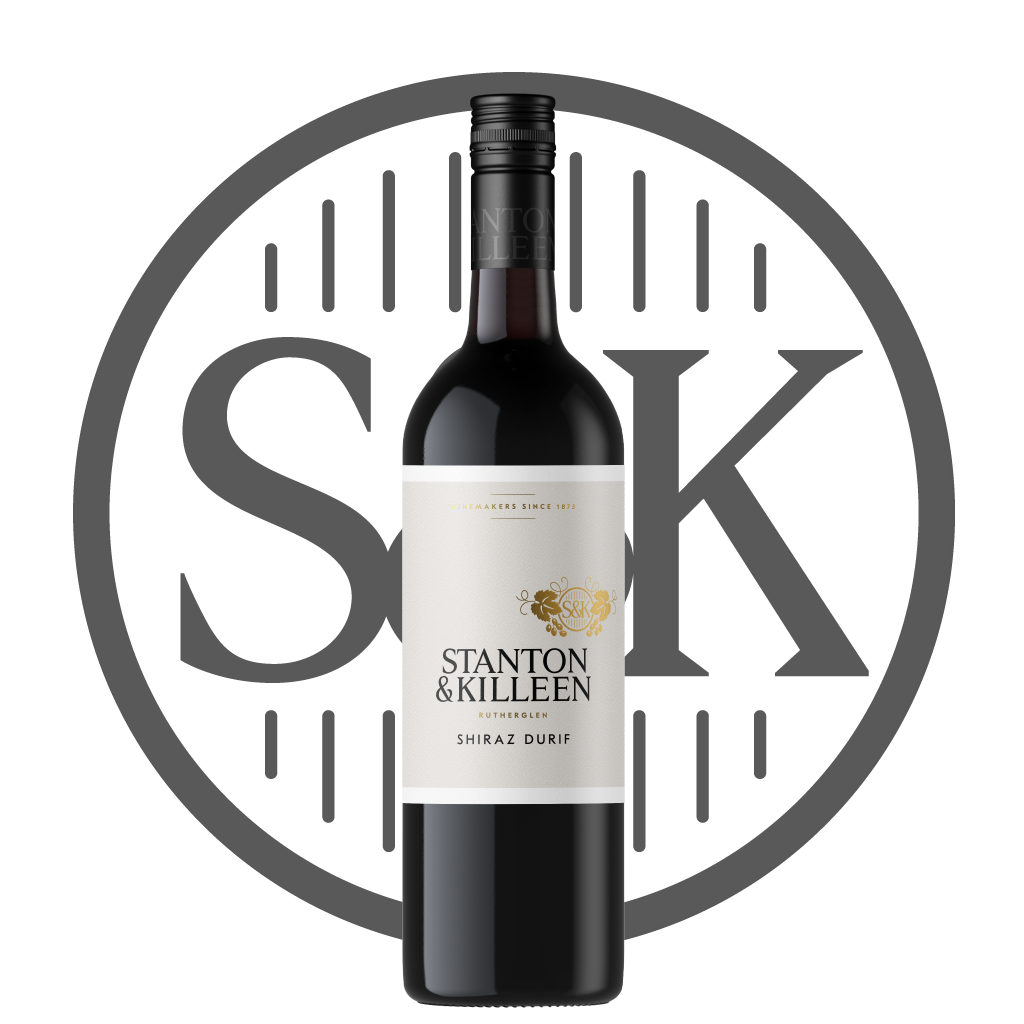
Blend Master. While Durif shines as a varietal wine, it's also a star in blends, adding structure and colour. Worth trying alongside our Shiraz Durif blend or one of our earlier Vintage Ports.
Perfect Pairing. Bold flavours and firm tannins make Durif a natural match for rich, hearty dishes: slow-cooked ragu, mushroom and truffle risotto, or a French-style cassoulet. The wine equivalent of a warm fire on a winter's evening. Serve at around 17-18°C to let the tannins soften and the aromatics open up. Well-made Durif from Rutherglen can be cellared for a decade or more, though today's modern styles from S&K are built to enjoy sooner.
Health Boost. Like other red wines, Durif contains resveratrol, a powerful antioxidant linked to heart health. Its thick grape skins contribute to higher resveratrol levels. In moderation, of course.
Award Winner. The 2022 Reserve Durif recently received 95 points in the Halliday Wine Companion and 91 points in the Real Review
Come and visit us at Stanton & Killeen and taste the bold beauty of Durif for yourself. And don't miss The Dark Side of Wine this winter, where Durif and Muscat take centre stage under the Rutherglen stars.